
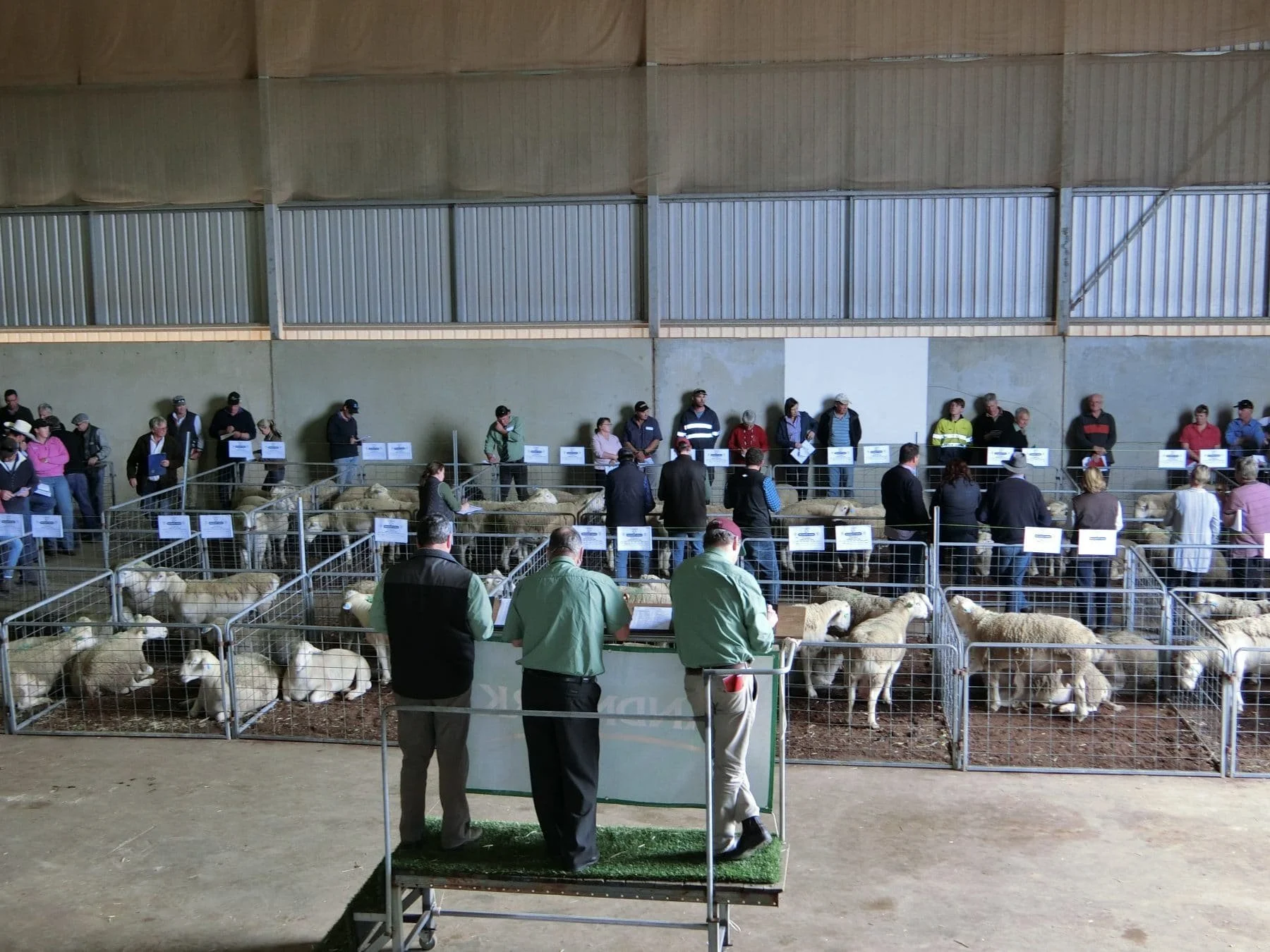
The modern approach to prime lamb production.
Less labour. Better welfare. More profit per ewe. Here's what shedding genetics actually deliver - and how Hillcroft UltraWhites perform in the systems that have made the switch.
A structural change, not a trend.
The economics of Australian sheep production have shifted. Labour is harder to find and more expensive. Shearer availability is no longer reliable in many regions. Wool prices for strong and coarse wools no longer justify the cost of producing them. Welfare expectations from consumers and regulators continue to rise.
At the same time, lamb demand - domestic and export - has stayed strong, with the Australian lamb market processing 22 to 24 million lambs a year. The producers who have moved fastest into shedding genetics are not following a trend. They are responding to a structural change in their cost base.
Five things that disappear.
- 01
No more shearing
We haven't shorn a sheep at Hillcroft Farms in over ten years. Around 70% of our flock sheds completely; the remainder hold an insignificant amount of wool that has no impact on health or performance. None of our sale rams will ever be shorn.
What that means for you: no shearer bookings. No shed days. No crutching. No skin classer. No wool freight. No jetting for flies. No wool price risk.
- 02
No lice
Without wool cover, lice cannot survive. We no longer treat for lice and have never seen lice on our sheep. That removes a recurring chemical cost, a labour overhead, and a withholding-period management headache from the operation.
- 03
No tailing
Our UltraWhites have been bred for a short tail. We don't tail our lambs. That saves time at marking, and it carries downstream welfare and health benefits - reduced incidence of arthritis, vaginal and rectal prolapses, and vulva cancers later in life.
- 04
Less feed, more flexibility
UltraWhites maintain weight on low-quality feed and lay down fat quickly when conditions improve. We routinely start summer supplementary feeding later and stop earlier than we did running wool sheep. Across a 5,000-head operation, that's significant.
- 05
More lambs, faster turn-off
High fecundity means fewer ewes are needed on farm to produce the same number of lambs. Fast growth means less time keeping those lambs on feed. Both are profit drivers - and both reduce the labour load. And with three lambings in two years, the lamb crop climbs even further.
Cost-per-ewe saving on shearing-related labour and infrastructure for a typical 5,000-head operation; and average days to turn-off for Hillcroft-sired lambs vs. industry average.
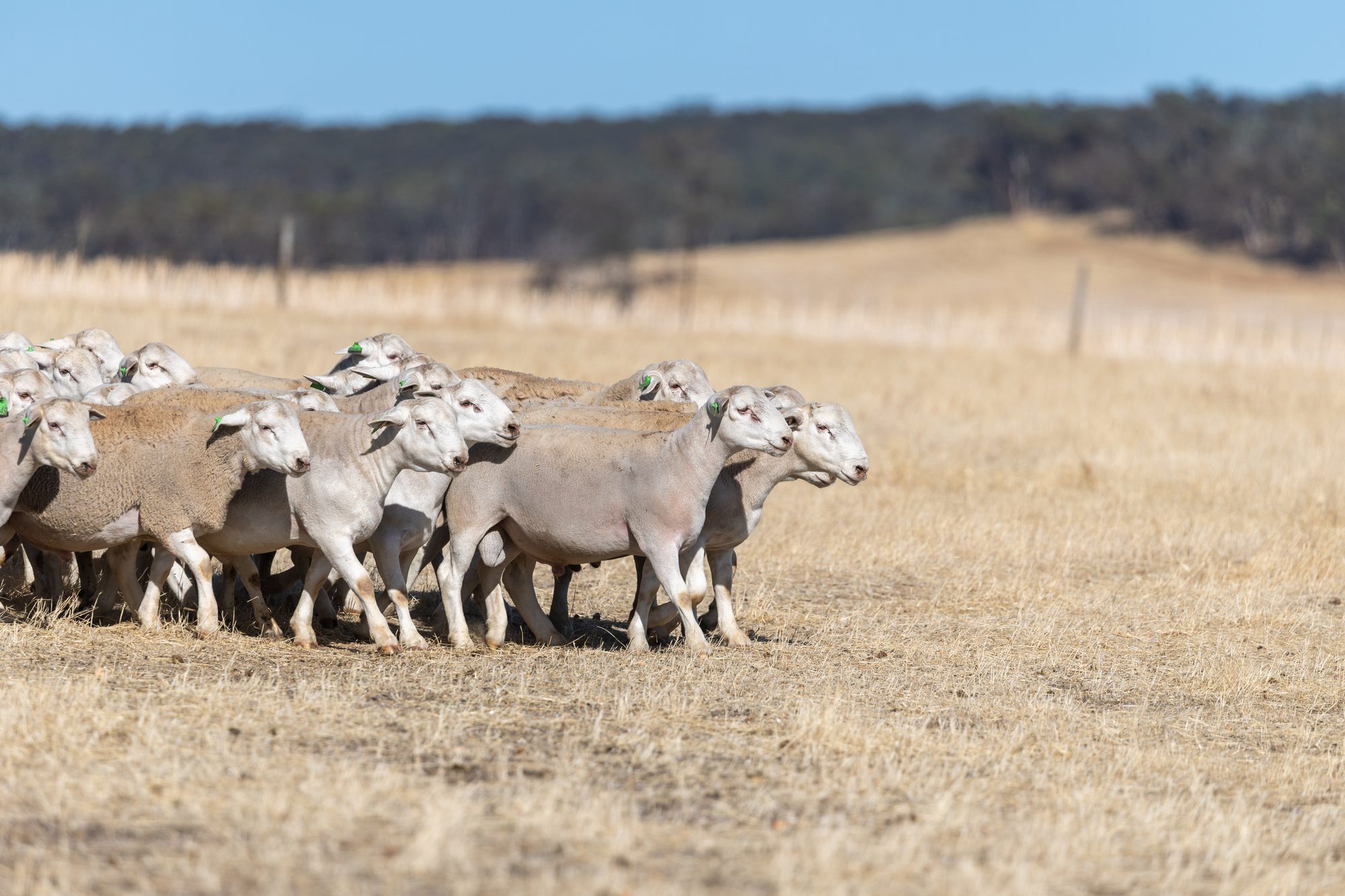
Run across Australia's sheep country
Earning their place at every step.
Most ram sales conversations are about the producer benefit. That's fair - the producer is the buyer. But Hillcroft UltraWhites have been bred with the whole supply chain in mind, and the genetics earn their place at every step.
Lower labour, higher fertility, simpler systems, high-yielding carcases, and a measurable lift in lambs weaned per ewe joined.
Consistent carcass weights, predictable fat cover, sound structure that holds up through the supply chain.
Eating quality traits genomically measured and selected for - the part of the supply chain most stud programs ignore.
Murdoch University meat-quality research findings, suitable for public-facing content.
Three commercial-client case studies (WA + eastern states).
To be supplied by Hillcroft.
Straight answers to common questions.
- Will UltraWhites work in my region?
- Hillcroft genetics are run successfully across Western Australia, South Australia, Victoria, NSW and Queensland - through wheatbelt, high-rainfall, and pastoral country. The breed is genuinely versatile, but the right management approach varies. Talk to us about your specific conditions.
- Do I have to lamb three times in two years?
- No. That's how we run our own ewes, but it isn't the only way. Many of our clients lamb once a year. The HFplus line was developed in part for producers who want a single annual lambing rather than accelerated lambing. Either way, our aim is high scanning percentages, not simply higher litter sizes.
- How quickly can I transition?
- Most of our clients move progressively, joining a portion of their flock to a Hillcroft ram each year and growing the shedding component over time. A full switch is possible but is rarely the most commercially sensible path. We'll work through the right pace with you.