
Hillcroft Farms
Fertility

Maternal traits, engineered.

Productive ewes are the engine of every commercial sheep business. Hillcroft UltraWhite ewes are bred to be productive - and our Australian-first HFplus gene is taking that productivity further than the breed has ever gone before.

UltraWhite milk machines

Quiet ewes are productive ewes.

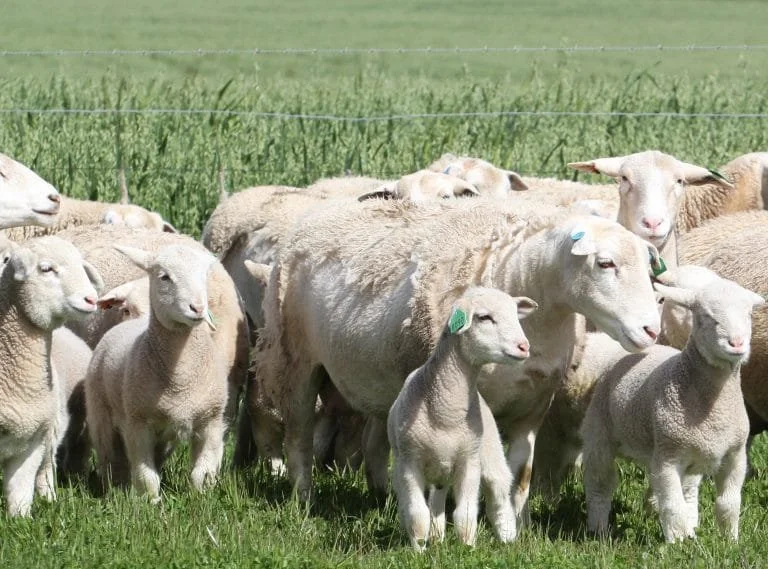
The Dorset is known worldwide for milk production, and it sits in the background of both of the UltraWhite's foundation breeds. It is not surprising, then, that our UltraWhite ewes can produce large volumes of milk and rear twins comfortably.

Through 20 years of constant selection pressure, our ewes have also developed strong mothering ability and a soft-natured temperament - which makes management of the breed both safer and more pleasant. Quiet ewes are productive ewes.

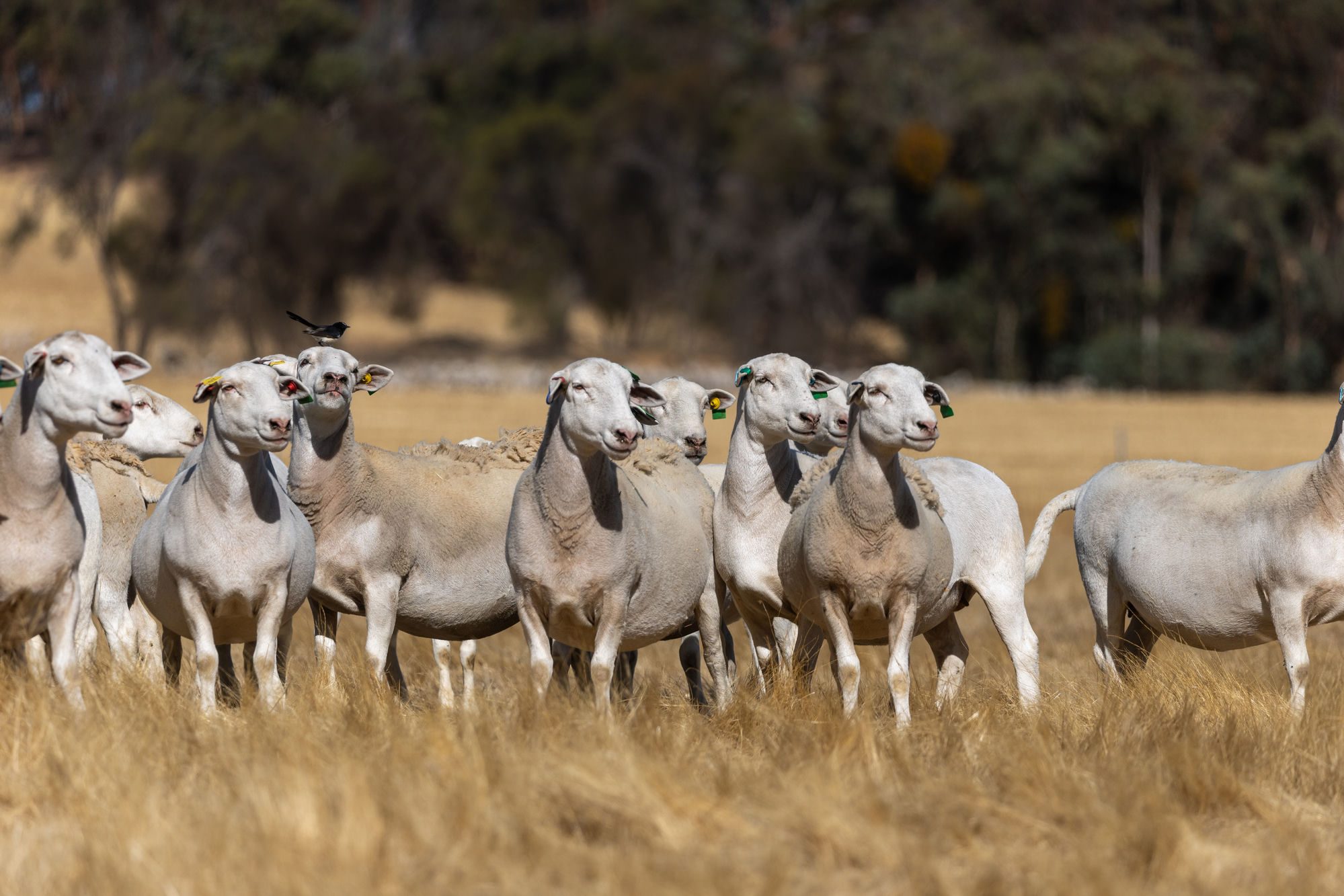
A line of UltraWhite ewes standing in a paddock

Productive ewes are the engine of the flock

Lambs anytime, anywhere

A non-seasonal breed.

The UltraWhite is a non-seasonal breed. Ewes will cycle and join successfully across the year, which makes lambing more than once per year possible if your production system supports it.

Lambing three times in two years is not unusual among UltraWhite producers - provided sufficient and economical nutrition is available for the out-of-season lamb. It's how we run our own ewes, and it's a meaningful productivity lift, but it isn't the only way to run the breed and we'll be the first to tell you it doesn't suit every operation.

UltraWhite ewe lambs and ram lambs also breed successfully from seven months of age, with no detrimental effect on lifetime performance, provided the young ewe is on adequate nutrition while carrying and rearing her first lambs.

Introducing HFplus · An Australian first

An Australian first, seven generations in the making.

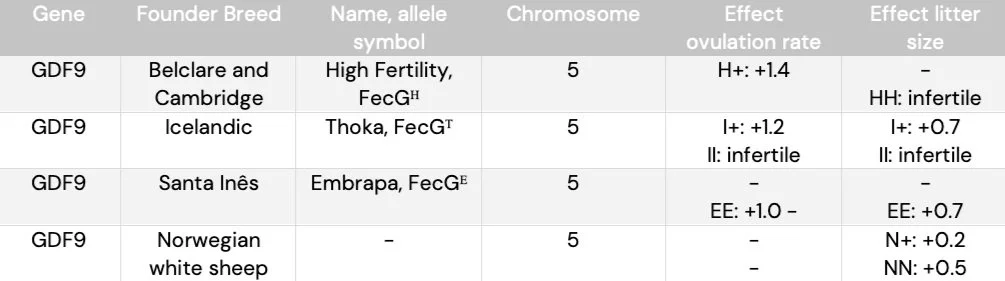
In 2015, we made a deliberate decision to take Hillcroft's fertility program a generation further. We introduced a variant of the GDF9 gene - sourced from New Zealand - into a small nucleus flock at Hillcroft Farms.

We named it HFplus to distinguish it from other GDF9 variants in the market, which have produced inconsistent litter sizes and other management challenges. The HFplus variant is different: it produces predominantly twins, with only limited numbers of singles and triplets. The litter sizes are larger, but they are predictable - which is what makes the gene commercially useful, not just scientifically interesting.

Seven generations of work

Done properly.

Bringing a new gene into a stabilised breed properly takes time, and we weren't willing to release it early.

HFplus semen was introduced into a group of pure UltraWhite ewes. Male progeny were then mated back to pure UltraWhite ewes. We repeated the backcross seven times, until the progeny were over 99% UltraWhite genetically - fully restored to type, with the HFplus gene carried alongside it.

At that point, the carriers held a single copy of the gene. We then intercrossed those single-copy carriers to breed double-copy carriers - animals that pass the gene on to all of their progeny.

What HFplus does
+60%
Expected conception lift · double-copy mating

Double-copy mating - where both the ram and the ewe carry two copies of HFplus - is expected, based on our on-farm testing and the available research on the gene, to lift conception by up to 60%. The exact result depends on nutrition and management.

Single-copy combinations are expected to achieve roughly half that result.

For a commercial producer, that means meaningfully more lambs weaned per ewe joined, without lengthening the joining period or changing the ewes' nutritional management beyond reason.

Coming soon

On-farm HFplus performance data from the Hillcroft nucleus flock (double-carrier matings).

The most defensible proof point for the 60% figure.

Why this matters for the industry

Many other shedding breeds struggle to achieve optimal reproductive results, and most are seasonal breeders - which makes the window for joining and the timing of lambing very narrow in a calendar year.

HFplus, infused into a non-seasonal, fully shedding breed, addresses both problems at once. The Hillcroft flock can lamb more frequently and achieve higher scanning percentages on the same ewes. The result is a meaningful lift in lambs weaned across the flock - and, as a flow-on consequence, lower methane intensity per kilogram of lamb produced.

Availability

HFplus double-copy carriers are available from our annual production sale, and have been since 2023. We hold them to the same structural, performance and genomic standards as every other ram in our draft - the gene is an addition to the program, not a replacement for the program.

Talk to us about whether HFplus genetics suit your operation, and how to integrate them. The conversation usually starts with the question of whether you want to lamb once a year with higher litter sizes, or accelerate lambing - both paths are open, and both work.

If you've read this far, you've seen the proof on three commitments: consistency, ease of management, and maternal productivity. The next page is about what to do with that information - how producers actually move into the breed.

Read: How to transition